Showing posts with label Christianity. Show all posts

Wednesday, March 20, 2013

Church History 101: Tertullian

Read the introduction to this series – 50 people you need to know: Church History 101

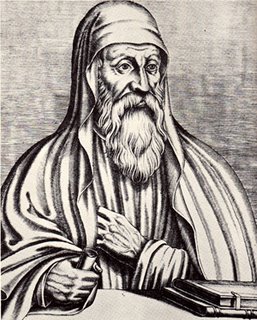
Much of the way we speak of God originated with Quintus Septimius Florens Tertullian (c. 160 – c. 225 AD). The passionate lawyer who converted later in life was driven to make complex theological concepts understandable to the common person.

The African theologian became known as "the father of Latin theology," as he was the first to write primarily in Latin and influence the Western church. Like Origen, however, some of his passions led to his embracing questionable beliefs later in life, leading to his not being granted sainthood.

He defended Christianity against heretical cults and tyrannical governments, while articulating difficult theological concepts in a creative and clear manner.

Tertullian is someone you absolutely have to know.


Who was Tertullian?


Born to pagan parents in modern day Tunisia, Tertullian was educated in rhetoric, law and literature. His father was a Roman centurion, which led him to a somewhat privileged life.

In his late 30's, however, Tertullian experienced a radical conversion to Christianity. He insisted that such a break with the former life was necessary. He said, "Christians are made, not born."

Immediately, he began to use his skills and education to defend his newfound faith against heresies from within and misrepresentations from without.

Many Romans, including those in positions of authority, perpetuated the lie that Christians sacrificed infants in their Lord's Supper celebrations. He refuted those charges, while advocating for religious freedom and fair trials for Christians, despite their minority status.

Fluent in Greek and Latin, Tertullian penned most of his works in Latin in order to reach the growing number of Christians in the Western part of the empire who only spoke Latin. This led to his veneration  and being seen in a patristic role among later Latin theologians.

Unfortunately, Tertullian allowed his passion to drive him further than it should. He often felt that the church was being too lenient with Christians who had openly sinned and later asked for forgiveness and re-admittance.

His tendency toward rigorism, perhaps even legalism, led him later in life to adopt an early form of Montanism due to its strict moral standards. He died 15 years later, removed from many he had influenced so greatly.

Why do you need to know Tertullian?


Have you ever used the word "Trinity" to speak of God? Do you speak of God existing as "three Persons, but one Being"? Those are terminology and phraseology that came from Tertullian attempting to explain deep theological truths in a way everyone could understand.

Not only did he coin the word, "Trinity," Tertullian also was the first to speak of Jesus as being one person with two natures. This allows us to better understand the incarnation and how it is that Jesus was both fully God and fully man.

He is often mistakenly judged to have believed that all philosophy was to be rejected by Christians. Rather, in On The Prescription of Heretics his rhetorical question  of "What does Jerusalem have to do with Athens?" is a rejection of self-proclaiming Christians solely relying on philosophy to the exclusion of scripture.

He recognized that Christianity must be defended against attacks from the government and undermining from heresies. His most famous work, The Apology, rebuffs slanderous rumors about Christianity and appeals both theologically and practically to government officials for freedom.

While Americans almost take the idea of religious freedom for granted, that is a rather recent development that originated with Christians like Tertullian. He wrote, "You cannot parcel out freedom in pieces because freedom is all or nothing." Christians, like all citizens, he argued, deserved the freedom to worship and access to a fair trial.

One of his most famous quotes comes from an attempt to persuade officials with the ineffectiveness of martyring Christians. He assured Roman officials, "The more you mow us down, the more numerous we grow; the blood of Christians is seed (of the church)."

Despite the excesses that led Tertullian to embrace a group that later become fully heretical, he brought a needed corrective to the growing laxness of many church leaders. Ethical standards were beginning to wane and Tertullian recognized that Christians must remain different. They must be counter-cultural and focused on the welfare of others.

Bluntly, he wrote, "He who lives only to benefit himself confers on the world a benefit when he dies."

That was not Tertullian. He did not live to benefit himself, but sought to better others and their walk with Christ. It was a loss for this world when he died around 225.

Thankfully he was such a prolific writer and we still have many of his writings today. From them we can learn who God is, how we can speak of Him more intelligently, yet clearly.

Tertullian has influenced the values that shaped the founding of the United States to the very words we use to speak about God.

Trivia Fact: Because of his fiery temper and argumentative nature, church historian Phillip Schaff wrote of Tertullian: "His polemics everywhere leave marks of blood. It is a wonder that he was not killed by the heathens, or excommunicated by the Catholics."

_______________________

Would you like to write a guest blog for the Church History 101 series? Check out the list of 50 people, find one you would like to work on, then contact me via emailTwitter or Facebook.

Monday, March 18, 2013

Are you looking for Jesus in dead places?

We only gather at graveyards to mourn and remember those who have died. We don't go to cemeteries looking for life.

The angels asked the women gathered at Jesus' tomb, "Why do you seek the living among the dead?" Even in first century Israel, people who were alive did not hang around places for the dead.

They were looking for Jesus in a place He would not be found.
"Why do you seek the living among the dead?"
That is still a relevant question for us today. Are we looking for Jesus among dead things?

There are two places in which we, like the women, can wrongly attempt to find Christ.

You don't go to the cemetery to find life. Photo from RGBstock.com by Miguel Saavedra
Obviously, we all know the spiritual death that sin brings with it, so I don't want to focus on it. If we have sin in our life, we have to deal with that first and foremost. You will never find Jesus by looking at sin.

Outside of clear sin, however, there are two other areas in which we could be vainly searching for Jesus. Like the women, sometimes we need a reminder about where to seek Christ.

Good intentions


The women thought they were doing the right thing. They wanted to honor Jesus in finishing the preparations for his dead body. To them, this was a way to show respect and love to their friend and teacher who had been wrongly crucified.

How often do we believe Jesus will be pleased simply because "our heart is in the right place"? You can have sincere beliefs, but they could be sincerely wrong. While having good motives is definitely part of seeking Christ, it is not the entirety.

Difficult tasks


Imagine how hard it must have been for them emotionally to gather those burial spices and leave early on that first Easter Sunday believing they would be giving the final burial preparations for someone they loved and even believed to be the Messiah.

Sometimes, we feel as if our doing something that is hard for us means we are automatically pleasing God. He may call us to difficult jobs, but the difficulty does not lead us to Jesus by itself. Difficulty is no full proof measure of obedience or righteousness.

What the women missed


They had good intentions and what they were doing was surely difficult for them, but they were missing one important thing – right theology. 

If they had understood what Jesus had been telling them about why He came, to die for our sins and rise again to give us life, they would not have come to the grave ready to grieve. They would have been there to anticipating a celebration.

As a follower of Christ, we have to not only be concerned about our motives, our actions, but also with our theology. All the right intentions and tasks will not please God, if we they originate from false beliefs about Him.

If our theology is right, however, and it does not drive us to do the right things with the right heart, then our theology is worthless. All three are interdependent on each other and should all flow from the life of a Christian.

The women were looking for Jesus in a dead place because their theology had not given life to their motives and actions. Right theology should be life-giving and should show us where we can find Jesus.

Friday, March 15, 2013

Top 10 reasons I'm not the new pope

When I saw the white smoke ascending from the chimney in the Vatican, two thoughts ran through my mind. One, I'm glad the cardinals were basketball fans and wanted to finish up before the NCAA tournament started. Two, there goes yet another job I can't get.

Yes, I realize I'm a Baptist and the pope has to be Catholic, but I thought my resume warranted a bit of a leeway on that requirement. I have a theological degree. I wasn't a cardinal myself, but I cheered for my son's tee-ball team named the Cardinals. I've been to a Catholic church.

Also, the conclave did seem to think my suggestion of "Casual Friday" was something they could get behind. One day out of the week to put down the robe, hat and all the stuffiness of the official wardrobe and relax in some sweatpants, flip-flops, t-shirt and a trucker hat turned backwards. OK, maybe not the trucker hat.

Despite all my strong points, I started to wonder how really open they were to my election as Pope Luther I when the conclave all rolled their eyes, while calling for security, after I asked if I could put spinner rims on the pope-mobile.

Before I left, I asked if they could give me one good reasons why I should not be the Bishop of Rome. Shockingly enough, they gave me the top 10 reasons I'm not the new pope.

Sure, Pope Francis can have wings on his outfit, but pope-mobile spinner rims was
"pushing it too far?" I don't think so. Photo Alessandro Bianchi / Reuters

Top 10 reasons I'm not the new pope


10. I enjoy being married, so there's that.

9. You try to get the papal conclave to do one little Harlem Shake video and everybody goes all crazy. I thought viral hit, but with the age of most of the cardinals, they thought violent hip.

8. The only Latin I can speak is of the pig variety. "An-cay I ear-way the ool-cay at-hay?"

7. One too many Manti Te'o jokes. Plus, I said Notre Dame was overrated.

6. I made a campaign promise to immediately issue a papal bull banning men's skinny jeans. Apparently, some of the cardinals are hipsters. Who knew?

5. They didn't seem to like my idea of using a March Madness style elimination tournament to determine who would be declared a saint.

4. They thought it was pushing it that I wanted to use my papal powers to demand baseball expand instant replay and remove the designated hitter.

3. I asked about changing up the wafers and wine in the eucharist to Snickers and Mountain Dew. I was even willing to allow Diet Dew for those seeking to lose a few pounds, but don't ask for the Snickers Peanut Butter Squares. That's just blasphemous.

2. My first order of business was going to be to declare as infallible church doctrine (ex cathedra) that yes, a tree falling in the woods does make a sound and it's stupid to even ask the question. Disagree? Excommunicated.

1. I requested that, instead of white smoke, they would announce my election via an Instagram photo of me trying to get in all the papal regalia with the caption "Popin' ain't easy."

_____________

What reason kept you from being elected as the leader of the Catholic Church at the most recent papal conclave? Unless, of course, you were elected Pope. In that case, welcome Pope Francis, I hope you possess a sense of humor as much as you seem to possess a sense of humility.

Just to break the joke for a moment and be serious, my thoughts as a Baptist echo those of Dr. Russell Moore. While I will continue to disagree with Roman Catholics over numerous theological reasons, I can be thankful for the contributions of the previous Pope and be in prayer for the current one.

Wednesday, March 13, 2013

Church History 101: Origen

Read the introduction to this series – 50 people you need to know: Church History 101

One of the more complicated figures in Church History, Origen's shadow looms large over Christianity through the Middle Ages.

While he is recognized as a Church Father and influential on biblical interpretation, the Catholic church refused to canonize him. Origen (185-254) was denied official recognition as a saint because of some beliefs that stretched beyond accepted orthodoxy.

Still, he was the most prolific thinker and writer of his day. His hundreds of works continue to influence Christian thought and the way we understand the Bible to this day.

One part heretic, one part apologist, all parts theologian, Origen is someone you assuredly need to know.

Origen being tortured for his faith.

Who was Origen?


Born to Christian parents near Alexandria, Origen was the oldest of seven children. He was taught the faith by his father Leonides, who was martyred in 202. His mother hiding his clothes prevented 17-year-old Origen from rushing out to die alongside Leonides.

To help support his family, Origen opened a grammar school and began to teach those training for the ministry. He studied under a pagan philosopher, so as to better understand the arguments against Christianity.

As his school exploded in growth, Origen noticed a desire to better understand Scripture by himself and others. Fueled by this passion, Origen worked for 20 years on the massive Hexapla, a six-column text that contained the Hebrew Bible and five Greek interpretations.

He spent much of his adult life bouncing back and forth from Alexandria to Caesarea. While his school and his childhood home was in the Egyptian city, he was often in conflict with Demetrius, the bishop there.

During the last 20 years of his life, Origen alternately refuted heretics and defended himself from charges of heresy. He confronted many of those contradicting Christian doctrine. "Now the true soldiers of Christ must always be prepared to do battle for the truth," he said, "and must never, so far as lies with them, allow false convictions to creep in."

He challenged beliefs in adoptionism (Jesus was born strictly human, but was adopted as divine after his baptism) and soul sleep (the soul lays unaware with the body after death until the resurrection), but held to his own unorthodox positions.

For various reasons, Origen lived most of his life above the threat of persecution, but at the age of 69 the wish of his 17-year-old self was granted. After suffering excruciating torture for three years, due to the government officials seeking to extract a recantation from him, Origen died as a result of injuries he sustained while a prisoner for his faith.

Why do you need to know Origen?


Origen was characterized by complexity. On many issues, he was one of the most dedicated defender of orthodoxy. Bishops would bring Origen to their towns to teach truth and rebut the false teachings of Gnostics and others. Yet, he varied from accepted church doctrine in several aspects.

While much of his conflict with Demetrius was personal, a church synod and council did condemn his teaching. He believed that all souls have always existed and fell into sin prior to their being connected to a body. Most troubling was his belief that the Trinity was a hierarchy extending down from the Father, not a relational equality eternally existing between Father, Son and Holy Spirit.

There is also a distinct thread of universalism through Origen's writings. He famously said, "The power of choosing good and evil is within the reach of all." For Origen, that even extended to Satan and the demons. He believed even they, along with all humans, would eventually be restored to Christ. "God puts Christ's enemies as a footstool beneath His feet, for their salvation as well as their destruction."

Despite these lapses, Origen was possibly the Church's first true theologian and Bible scholar, as he established a manner of biblical interpretation that dominated Christianity for hundreds of years. His primary work, On First Principles, managed to meld Greek philosophy and biblical exegesis to develop a Christian philosophy.

While, most today would not accept allegorical understanding of Bible passages to the extent Origen did, he helped us to look at Scripture as a living document. He saw the entire Bible, including the Old Testament, as perpetually relevant. He taught the prophets knew about the Messiah they were predicting.
"For if the mystery concealed of old is made manifest to the Apostles through the prophetic writings, and if the prophets, being wise men, understood what proceeded from their own mouths, then the prophets knew what was made manifest to the Apostles."
Despite his massive intellect and immense talents, Origen remained humble about his own knowledge and the extent any of our knowledge can stretch into knowing God fully.
"For whatever be the knowledge which we are able to obtain of God, either by perception or reflection, we must of necessity believe that He is by many degrees far better than what we perceive Him to be."
He recognized that idolatry was not actually centered in a pagan temple, but a wayward heart.
What each one honors before all else, what before all things he admires and loves, this for him is God.
Origen sought to expand Christian influence in academic realms and develop a biblical systematic theology and philosophy. We owe much to Origen's tireless efforts and unquenchable thirst for more knowledge of God and His Word.

Odd Trivia Fact: Origen was such a prolific author that Ambrose, one of the wealthier Church Fathers, paid to have seven secretaries record Origen's dictated writing. Origen kept them all busy. Fellow Church Father, Jerome asked, only half-joking, "Has anyone read everything that Origen wrote?"
_______________________

Would you like to write a guest blog for the Church History 101 series? Check out the list of 50 people, find one you would like to work on, then contact me via emailTwitter or Facebook.

Monday, March 11, 2013

3 reasons The Bible series has to include the rough parts

As History Channel's The Bible miniseries moves along, it enters the area of the Bible where things aren't quite clean and sanitary.

Judges is a book full of bad choices and worse results. The conquering of the promised land was not pretty. Not every character is squeaky clean.

The Bible decided to portray these aspects on television. Obviously, they didn't go explicit, but they did not shy away from showing the mistakes made by biblical "heroes" or the violence that was commonplace in their battles over land.

Some claimed to be offended that The Bible would glorify violence or showcase Rahab the prostitute. They accused History Channel of trying to use those to drive up ratings.

That is an odd claim, since the opening episode of The Bible was the most watched scripted program on television this year. I don't think it needs sex or violence to gin up an audience.

I do, however, believe that The Bible made the correct decision in showing the violence involved and portraying someone like Rahab. There are three reasons why those things have to be included in an accurate presentation of the the Bible.

Why include stories like Rahab's in The Bible miniseries?

1. It's true.


The Bible claims to be a historical book. People from the three major monotheistic religions take the Old Testament to be an accurate representation of the facts of that time period.

Since The Bible claims to tell the story of its namesake, it needs to include those events or ones similar to them. They are actually in the Bible.

Battles were bloody and violent. David cut off Goliath's head. Samson crushed enemies with various homemade weapons. Joshua and the Israelites destroyed cities, occasionally even killing the women and children.

You cannot tell the story of the Bible without being accurate to the source material, which does contain those types of scenes.

2. It demonstrates the reality of man.


Man exists simultaneously as the only being in existence to be created in the image of God, to be divine image bearers, yet also to be fallen and twisted from our original design.

When the Bible shows the actions and even thoughts of men and women, it makes that dual fact very clear.

The fact that battles and killing occur show that man is fallen. Prostitutes have a business because man has twisted God's design for sex. Even death is a reality, only because of the fall of man.

The good that is described in Scripture is there to point both backwards and forward. It points back to the way things were when God created everything. While it also points forward to the way things will be when God completes the redemption and restoration of His creation.

The Bible needs to show man in a positive and negative light because he exists as a fallen creature who still retains remnants of God's image.

3. It makes it evident that grace has been the plan since the beginning.


Many are under the false assumption that Jesus was a last resort plan. God had to come up with something because man screwed things up, as if it wasn't until around 2,000 years ago that the Father thought about sending the Son down to save us.

That is not the case at all. Revelation describes Jesus as being the Lamb who was slain before the foundation of the world. This was God's plan to bring us back into a right relationship with Him from the beginning and we see that in the Old Testament.

The Bible allows us to see that with people like Rahab the prostitute. She's a foreigner, a prostitute from one of the cities the Israelites conquered on their way to the promised land. Rahab doesn't deserve salvation.

That is entirely true. She doesn't deserve it, but she gets it anyway. Not only that, but she is placed into the lineage of the coming King David and the incarnate King of kings and Lord of lords. She is part of Jesus' ancestry.

Seeing Rahab there reminds us that grace is here. That is a great thing.
______________________

What did you enjoy most about The Bible's second episode? Are there any other reasons that they should have included the frailties and feebleness of man?

Thursday, March 7, 2013

Rebutting atheist critics, curing AIDS is Kingdom work

If you were to believe many of the devout atheists, Christians have made and continue to make no contributions to the advancement of medicine. In the atheist's version of the Christian faith, followers of Jesus must reject both sin and science.

Thankfully, the caricature of the science-hating Christian put forth by Richard Dawkins and others evangelistic atheists is as real as the Flying Spaghetti Monster some have used in an attempt to lampoon God.

If you needed further proof, Hannah Gay gives you all that you need.


Dr. Gay is a missionary turned doctor, an unassuming Bible drill teacher who just became a medical rockstar, as her treatment plan appears to have functionally cured a child of AIDS.

While her work is grounded in hard science and empirical data, it also flows from her faith in Christ and compassion on those hurting.

Many atheists may have been shocked to find out a Christian was the one to discover the medical breakthrough, but fighting against diseases is entirely Christlike. After all, Jesus spent much of the limited time He had here on Earth curing people of sicknesses.

Jesus' healing work was not random or happenstance. It was intentional, introducing the arrival of the Kingdom, letting everyone know that the restoration process had begun.

Christians are to pray for and work toward the realization of God's Kingdom on this planet. Jesus taught us to pray that God's will would be done here on Earth as it is in Heaven.

Sickness is not part of God's creation and will not be included in Heaven. It only came about after the fall. Sin brought sickness into this world. The Savior sought to remove it, to reverse the curse that we invited here.

Gay's work is God's work. Fighting against AIDS and other life-threatening diseases reflect the will of our Father. 

Those Christians, how many there may have been, in previous generations who believed that working to cure certain diseases like AIDS was attempting to undermine God's judgment didn't understand God, His Kingdom and the work He has placed us here to accomplish.

One cannot welcome both God's Kingdom and sin's curse. Those two can never permanently coexist. Where God's Kingdom is present, the curse of sin is being vanquished, including ailments in our bodies.

Obviously, there is more to the work than simply seeking a cure for physical illnesses. We are, most importantly, called to proclaim Christ as the only remedy to our spiritual death, but that does not preclude us from contributing to the end of other aspects of the curse, like specific diseases.

As a missionary in Africa with her husband during the height of the AIDS epidemic there, Gay saw the need for both – physical and spiritual healing.

Followers of Christ should recognize death as an enemy and anything that brings it about as an accomplice worthy of our raging against it.

True and proper Christian theology encourages any and all medical and scientific advancements that encourage a healthy life, provided those advancements are obtained through ethical means. Destroying one life to help another life is not the manner in which God would have us look to the realization of His Kingdom.

Fighting and curing AIDS, cancer, Alzheimer's and every other disease is not contrary to the Christian faith. On the contrary, it should be a goal of it.

In working to end AIDS in children, Dr. Hannah Gay is striving toward the advancement of God's Kingdom, just as she was on the missionary field. May every Christian similarly work in the power of the Holy Spirit to reverse sin's curse and redeem God's creation in the test tube and beyond, wherever He may lead.

Wednesday, March 6, 2013

Church History 101: Irenaeus

Read the Introduction to this series – 50 people you need to know: Church History 101

[Guest post by Josh Strickland]

Irenaeus (130-200; pronounced eer-uh-NAY-us) was the bishop of Lyons (in modern day France) during the last quarter of the 2nd century. Irenaeus was a follower of Polycarp, who was already covered in this series.

Bishop, author, and missionary, Irenaeus led the push to solidify unity within the church: recognizing which books were divinely inspired as Scripture, defending the faith against the heresy of Gnosticism, and setting up doctrinal foundations to hold the faithful for centuries to come.

Irenaeus is someone you definitely need to know.


Who was Irenaeus?


Very little is known about the life of Irenaeus; much more is known about him through his writings. Accounts relate that Irenaeus grew up in a Christ-following family in or near Smyrna, where Polycarp was bishop.

The opportunity to hear Polycarp was commonplace for Irenaeus, who joyfully recounts listening to Polycarp's teaching and preaching. Over some time, Irenaeus became one of the elders of the church in Lugdunum, or Lyons.

The church suffered through heavy persecution under the reign of Marcus Aurelius, yet the church still sent Irenaeus to Rome with a letter concerning Montanism. This trip changed his life, as the rest of the elders in Lyons were killed from the persecution while Irenaeus was still in Rome. After returning to Lyons, Irenaeus was made bishop of Lyons, where he served for most (if not all) of the rest of his life.

Irenaeus wrote two major books: Against Heresies, a five book volume which was a mixture of an defense against Gnosticism (particularly against the Valentinian sect) with a systematic and doctrinal theology, and Proof of the Apostolic Preaching, a much shorter work that was mostly a summary of the theology portions from Against Heresies.

He wrote several other works, but most of what we know about these works is solely from other early Church Fathers references to them. Jerome and others claim that Irenaeus was martyred under the persecution of Septimus Severus (ca. 202), but no evidence has been found to verify the claim. We don't know how, but he died and was buried under the church building in Lyons.

Why do you need to know Irenaeus?


If Polycarp is Obi-Wan Kenobi, then Irenaeus is Luke Skywalker. The ever faithful defender of the church, there was no one else so pointedly staunch and able to defend Christianity from the growing heretical sects in the region. And where Polycarp began the idea of codifying the New Testament books together, Irenaeus finished the claim.

The central aspect of Irenaeus' legacy is assuredly his most important impact in the church: the regula fidei. Translated as "rule of faith," the regula fidei is the Christ-centered summary of the grand narrative of Scripture. While these ideas or phrases may be familiar to modern Christians, they originated with Irenaeus.

This rule of faith wasn't secret by any means; the rule of faith was the summation doctrines that every Christian believed and publicly proclaimed. These publicly-claimed oral traditions formed the basis for right teaching, defense of the faith, proclamation of new belief and apostolic succession.

When Marcion decided to cut the entire Old Testament and most of the current apostolic writings from his "scripture," the alarm sounded that it was not only necessary to determine which books and letters were to be included in the canon of Christian Scripture, but also why they were to be included.

It is here where the regula fidei stands its ground. Irenaeus was adamant that the four Gospels we currently have – and only those four, compared to other "Gospels" – were divinely inspired.
"The Gospels could not possibly be either more or less in number than they are. Since there are four zones of the world in which we live, and four principal winds, while the Church is spread over all the earth, and the pillar and foundation of the Church is the gospel, and the Spirit of life, it fittingly has four pillars, everywhere breathing out incorruption and revivifying men. From this it is clear that the Word, the artificer of all things, being manifested to men gave us the gospel, fourfold in form but held together by one Spirit." Against Heresies 3.11.8 
The regula fidei served as the baseline for weeding through the entirety of books and letters to draw out and hold together the inspired books we have today, even if the canon of New Testament books wasn't finalized during Irenaeus' time.

As Valentinus grew his sect of Gnosticism, he claimed that only the Gnostics had acquired a secret oral tradition from the apostles that proved Gnosticism to be correct. However, this was in direct conflict with the regula fidei, and Irenaeus proved through public knowledge that the appointments of all of the current bishops could be traced back to the apostles or those associated with the apostles, that no one in those succession lines had taught anything differently than what was agreed upon in the regula fidei, and that any secret oral tradition smacked against the whole purpose and mission of Christ Jesus.

Irenaeus added that even more important than the actual line of succession of bishops and elders from the apostles was the succession of the rule of faith from the apostles – their teaching and preaching.
"But the followers of Valentinus, putting away all fear, bring forward their own compositions and boast that they have more Gospels than really exist. Indeed their audacity has gone so far that they entitle their recent composition the Gospel of Truth, though it agrees in nothing with the Gospels of the apostles, and so no Gospel of theirs is free from blasphemy. For if what they produce is the Gospel of Truth, and is different from those which the apostles handed down to us, those who care to can learn how it can be show from the Scriptures themselves that [then] what is handed down from the apostles is not the Gospel of Truth." Against Heresies 3.11.9 
The rule of faith also found itself the basis for oral and written creeds. The Apostles' Creed and the Nicene Creed have been profoundly popular and useful over the centuries, and both of these are heavily grounded in what was agreed to be the rule of faith considered by Irenaeus.

Odd Trivia Fact: The Protestant Huguenots in Southern France, completely destroyed both Irenaeus' tomb and remains in 1562. Oops.
___________________________

Today's post was written by Josh Strickland. If you would like to write a guest post for the Church History 101 series, check out the list of 50 people and let me know via email, Twitter or Facebook.

Monday, March 4, 2013

An unexpected lesson from History Channel's The Bible

Millions of people, Christians and not, tuned in to see the premiere of the History Channel's new miniseries The Bible. It will continue each Sunday until the final episodes air the night of Easter.

From all accounts, Mark Burnett, along with his wife Roma Downey, from Touched By An Angel, have produced a high quality and faithful abbreviated adaptation of Scripture.

For Burnett, the man behind Survivor, The Voice and other popular reality TV fare, and his wife, this was a labor of love and an outgrowth of their Christian faith.

It garnered headlines around the globe and become the number one trending topic on Twitter, which means that not only were people watching it, they were talking about it and engaging with it. That is without a doubt a great thing.

Regular Americans, even Christians, have a hard time with basic Bible knowledge, much less seeing the entire book as a cohesive story that weaves smaller units into a much larger whole. Hopefully, this miniseries can help correct some of that.

My hope, however, is that it not only inspires Christians to read and know the stories of the Bible, but that it drives us to create new stories. It's time we became storytellers again.


Christianity continues to explode across Africa, South America and Asia, in so-called "hard places." Often, this comes with creative means of sharing the Gospel. One of the most effective ways is essentially what The Bible is doing – telling the grand story of Scripture in the form of smaller, interconnected stories.

Storying enables missionaries to exponentially spread their faith as stories stick with listeners, who can then share the same story with someone else. These stories display truths from the individual accounts, but they also point to the Truth personified in Jesus.

Unfortunately, many in the Western church have moved away from using stories at all, content with merely teaching practical truths. While there is always a place for that, we hinder our reach when we only teach and speak of truth propositionally.

Think of the Bible. Christians regard it as God's Word. He has revealed Himself to us through this book, which is over 70 percent narrative. The majority of the way God has chosen to show Himself is through stories.

We remember the story of Abraham almost sacrificing his son Isaac. That
story connects with us on an emotional level, making it easy to remember.
When Jesus came as God in flesh, how did He choose to speak to people? Often times, He spoke in stories – parables and illustrations.

God recognizes that stories connect with us on a deep, emotional level that goes beyond merely agreeing with an argument that may be presented. Psychologically, we are much more likely to accept truth when it is presented in story form.

C.S. Lewis, as someone who knew a good bit about both stories and rational arguments, spoke of the use of stories to convey truth in terms of "stealing past the watchful dragons." People have their guards up when they feel as if you are trying to convince them, but they are much more relaxed and open when they hear a good story.

Recognizing all of this, why are Christians still so reluctant to take their talents to Hollywood or a broader cultural context? In discussing the effective apologetic work, Lewis encourages Christians to not write "more little books about Christianity, but more little books by Christians on other subjects — with their Christianity latent."

Can I expand that to say we don't really need more Christian fiction, but more fiction by Christians with their Christianity serving as the foundation for the story. Can we not write stories that convey spiritual truth without casting it as a blatant Christian story?

The characters in Jesus' parables were most often ordinary people in situations the audience would recognize. For too long, Christians have only sought to make stories with fake characters in unrecognizable circumstances. Our stories, unlike those of Jesus and the Bible itself, often fail to resonate with audiences.

The Bible miniseries is a great way to show millions of people stories from Scripture in an engaging way. That is not the only way, however. Here is where we follow our Creator in being creative and communicating our faith in a compelling manner through riveting stories.

Even if you can't create grand imaginary stories like Lewis' Chronicles of Narnia or J.R.R. Tolkien's Lord of the Rings, you do have a story that you can tell better than anyone else. If nothing else, tell that story well.

While the History Channel's series will hopefully encourage many to know their Bible better, I hope it will inspire Christians to tell stories that will cause people to know our Savior better.
__________________

What stories can you tell that speak of Truth? In what ways can The Bible inspire us to be original and creative in the way we present God's Word to those around us?

Wednesday, February 27, 2013

Church History 101: Justin Martyr

Read the introduction to this series – 50 people you need to know: Church History 101

Justin (100-165) was born to pagan parents, but never felt satisfied with any of the irreligious philosophies he learned. It was not until he heard a humble, older Christian man teach about Christ, that Justin knew he had found truth.

In his new found faith, not only did he find truth, but Justin found a truth worth living and dying for –– as he was beheaded for his refusal to denounce Jesus. In his life, Justin sought to demonstrate how the Christian faith was consistent with reason and logic. In his death, he earned the surname Martyr.

Justin Martyr is someone you must know.

Stained glass window of Justin Martyr

Who was Justin Martyr?


Born at the turn of the second century, Justin grew up under two pagan parents and early on began to seek after knowledge. According to Justin himself, he studied under several of the most important philosophical systems of the day, but found them all wanting.

Around the age of 30, however, he went out into a field near the sea to be be alone with his thoughts and had an encounter that would change his life. An older man began to follow him at a distance. Justin turned to speak to him and before he really knew what was happening, the man was presenting the gospel.

Finally, Justin had found the true philosophy for which he had been searching. Of that moment, he wrote:
"A fire was suddenly kindled in my soul. I fell in love with the prophets and these men who had loved Christ; I reflected on all their words and found that this philosophy alone was true and profitable. That is how and why I became a philosopher. And I wish that everyone felt the same way that I do."
Justin spent the rest of his life defending this true and profitable philosophy. He even went to Rome itself to found a school at which he taught Christian philosophy. He wrote several defenses of the Christian faith, even writing apologetic works directed to the Roman emperor and the Roman senate.

After contending for Christianity with a cynic philosopher, he was turned in to the government as a heretic and false teacher. They arrested him and six of his disciples. When asked to reject Christ and make a sacrifice to the Roman gods, Justin boldly replied:
"No one who is rightly minded turns from true belief to false."
He was then led away to be beheaded, thus garnering the surname of Martyr.

Why do you need to know Justin Martyr?


Before there was William Lane Craig, Alvin Plantinga, Norman Geisler, John Lennox and any other of the large number of Christian apologists and philosophers today, there was Justin Martyr.

He recognized that Christianity was the true philosophy. It wasn't simply a religious system for some. It is a life changing philosophy that is, above anything else, true for everyone at all times.

Along many other Christian leaders of his day, Justin countered the false teaching of the Gnostics and Marcions. He also sought to present a clear defense and explanation of Christianity to the government officials of his day.

Living under an oppressive government that often sought, and occasionally took, the lives of Christian leaders, Justin boldly defended the faith to the highest officials in the land. He did not, however, do so with a threat or in an insulting manner. He sought to use reason to convince the leaders of their mistake.

Justin wanted to explain how Christians should make the best citizens of Rome. He did not threaten the emperor or the senate with an armed rebellion. He did not insult them, but rather played to their best interests in defending Christianity.

In confronting the lies of those defaming the Church, he used the best weapon he could – the truth. In his First Apology, he explained the worship practices of local Christians to dispel vicious rumors circulating about what went on during church services. This gives us a glimpse at the worship practices of early Christians.
On the day called Sunday there is a gathering together in the same place of all who live in a given city or rural district. The memoirs of the apostles or the writings of the prophets are read, as long as time permits. Then when the reader ceases, the president in a discourse admonishes and urges the imitation of these good things. Next we all rise together and send up prayers.

When we cease from our prayer, bread is presented and wine and water. The president in the same manner sends up prayers and thanksgivings, according to his ability, and the people sing out their assent, saying the 'Amen.' A distribution and participation of the elements for which thanks have been given is made to each person, and to those who are not present they are sent by the deacons.

Those who have means and are willing, each according to his own choice, gives what he wills, and what is collected is deposited with the president. He provides for the orphans and widows, those who are in need on account of sickness or some other cause, those who are in bonds, strangers who are sojourning, and in a word he becomes the protector of all who are in need.
From very early on, Christian worship services consisted of reading from the Bible, having a preacher expound on the reading, singing songs, taking communion, collecting offerings, which would then be used, in part, to care for those in need.

Justin left us a record of what services were like in his day, but he left us an example of how we can live out our faith regardless of what governments or popular opinion may say in our day.

Trivia Fact: Justin was a prolific writer, with his works being mentioned by numerous other early Church leaders. We have at least pieces of eight works, while three of his major works (First Apology, Second Apology, Dialogue with Trypho) remain intact.
_______________________

Would you like to write a guest blog for the Church History 101 series? Check out the list of 50 people, find one you would like to work on, then contact me via emailTwitter or Facebook.

Wednesday, February 20, 2013

Church History 101: Polycarp

Read the introduction to this series – 50 people you need to know: Church History 101

A disciple of the apostle John, Polycarp (69-156) is perhaps the most important link between the age of the Church Fathers and the New Testament era.

He was appointed by some of the apostles as bishop of the church at Smyrna, a pivotal church in modern day Turkey, and was one of the earliest defenders of the faith against the new heresies that rose up along side orthodox Christianity.

Polycarp is someone you absolutely should know.

Polycarp's martyrdom
A mural of Polycarp's martyrdom can be found in the Catholic church near Smyrna.
The man to the far left is believed to be a self-portrait of the artist, Raymond Péré.

Who was Polycarp?


Polycarp
Much of what we know about Polycarp's life comes from the writings of other Church Fathers, like Irenaeus and Tertullian. We know that he met with and was converted by apostles who had personally been with Jesus. In particular, he studied under John. Later, the apostles appointed him as pastor at Smyrna.

As a leader of the church during the transitional period after the deaths of the apostles, Polycarp helped to provide steady, humble leadership to a growing movement which faced many challenges and difficulties.

He traveled to Rome to discuss disagreements over some issues, including the date of the celebration of Easter. According to Irenaeus, Polycarp and the bishop of Rome, Anicetus, came to quick agreement over core doctrinal issues, while agreeing to disagree over the proper time to celebrate Easter.

In Rome, Polycarp helped to confront heresies, particularly gnosticism and those following Marcion, who held heretical beliefs about the nature of God and rejected the Old Testament. Polycarp was able to convince many of those in Marcionism that they were in error.

The story of his martyrdom in 156 is relayed in a letter written to the church in Smyrna, which survived as is known as, appropriately enough, The Martyrdom of Polycarp. In it, the bishop is described as bravely facing his fate and boldly responding to his persecutors' request to deny Christ and worship Caesar: "For eighty and six years have I been his servant, and he has done me no wrong, and how can I blaspheme my King who saved me?"

Polycarp was put to death for his King.

Why do you need to know Polycarp?


Outside of the New Testament itself, Polycarp's epistle to the church at Philippi is one of the oldest Christian documents we possess. From it, we can gather that Polycarp was a man of immense humility, despite his sitting under the feet of John and being an important leader in the early Christian church.

We also find that he was one who greatly valued Scripture. Some have suggested that it was he who first set out to gather and distribute what would become the books of the New Testament. In his letter, he quotes frequently from the Bible, even referencing Paul and his letters "from the study of which you will be able to build yourselves up into the faith given you."

This lets us know that it did not take years and years for the New Testament books to garner reverence and become regarded as inspired pieces of Scripture. It happened, if not immediately, almost immediately.

His leadership in the Church helped it move beyond the lives of the apostles to everyone else. He held fast on core doctrinal issues, while being gracious over less essential matters. His humility through out his life, regardless of the circumstances, can be of great encouragement to those who follow after him.

Simply put, Polycarp provides a great example to anyone who seeks to stand firm for Christ during an age that challenges the central tenets of the faith, while being loving to those inside and outside the church.

Odd Trivia Fact: The Martyrdom of Polycarp (16:1) records that the fire that had been set to burn the bishop alive would not touch him, so an executioner was sent to stab him in the chest. After this, it says a dove burst from his chest and so much blood came out that it put out the fire.

Regardless of the specifics, it seems clear that Christ provided an evident difference in the way Polycarp lived and died.
_______________________

Would you like to write a guest blog for the Church History 101 series? Check out the list of 50 people, find one you would like to work on, then contact me via email, Twitter or Facebook.

Wednesday, February 13, 2013

50 people you need to know: Church History 101

“My task in this class is to convince you that there was someone between your grandmother and Jesus and that it matters” – Timothy George, church history professor.
There have been a lot of people since the time of the New Testament and before our grandparents who have made a tremendous impact on Christianity and the world. Unfortunately, to our detriment, we refuse to take the time to get to know them.

The ideas we have about our faith and the way we practice it did not originate in a temporal vacuum. They have been influenced by all of those who have gone before us.

Seeing the grand historical scope of Christianity allows us to better appreciate its grandeur and the glory of its Savior. It also can encourage us, as we recognize that we are surrounded with a great cloud of witnesses, both living and dead. Many of them died defending some of the very doctrines you hold.

Just as Christ walks with us, others have walked before us. We do ourselves a disservice by not investigating their lives and contributions to the faith as a whole and our faith as individuals.

Recognizing that, with suggestions from friends on social media, I developed a list of 50 influential individuals within Church history. There are 50 men and women you, as a Christian, should know. Starting next week, once or twice a week, The Wardrobe Door will feature a profile of one of these 50 people in a new series called Church History 101.

Photo from RGBstock.com
Before you see the list, you should know what it is and what it is not. This list is not the 50 most influential people in Church history. I would not be qualified to make that judgment. This is merely 50 influential individuals whom I feel should be recognized and, in some cases, more widely known.

I have intentionally left out individuals from the New Testament and those who are alive today. Obviously, Billy Graham has made a significant impact on Church history, but his contributions are not yet completed.

Also, recognizing my ecclesiological background, I have focused mainly on those within my own frame of reference (Protestant, Evangelical and Baptist). This means I have left off popes, as influential as many have been, and the founders of Pentecostalism, despite its rapid growth in the last two centuries.

I have also not included those with whom I have major, central theological differences, as well as individuals outside of Christianity who may have impacted the church from the vantage point of a spectator. I want to speak positively of each one and how Christ worked in and through them.

This is a group who is entirely flawed and imperfect, but they made a lasting impact by simply obeying what Christ had called them to do. I hope in the coming days, weeks and months, these men and women will make an impact on your life and inspire you to your own life of obedience and impact.
50 Influential Individuals in Church History
1. Polycarp
2. Justin Martyr
3. Irenaeus
4. Origen
5. Tertullian
6. Athanasius
7. Aquinas
8. Anselm
9. John Chrysostom
10. Augustine
11. Patrick
12. William of Ockham
13. Francis of Assisi
14. Jon Huss
15. John Wycliffe
16. William Tyndale
17. Balthasar Hubmaier
18. John Bunyan
19. Martin Luther
20. John Calvin
21. John Knox
22. Thomas Cranmer
23. Thomas Helwys
24. Isaac Newton
25. Blaise Pascal
26. Roger Williams
27. David Brainerd
28. Charles & John Wesley
29. Jonathan Edwards
30. George Whitefield
31. George Lisle
32. Andrew Fuller
33. William Carey
34. Adoniram & Ann Judson
35. George Handel
36. William Palely
37. Isaac Watts
38. William Wilberforce
39. George Mueller
40. Timothy Dwight
41. Charles Finney
42. Dwight L. Moody
43. Charles Spurgeon
44. Lottie Moon
45. C.S. Lewis
46. J.R.R. Tolkien
47. Jim & Elizabeth Elliot
48. Corrie Ten Boom
49. Dietrich Bonhoeffer
50. Charles Colson
What do you think of the list? Who would you like to see included that I left off? Are there some names that you don't know? Do you see someone here that you are particularly interested in?
____________________________

If you would like to write a guest post on an individual for the Church History 101 series here at The Wardrobe Door, email me at WardrobeDoor@gmail.com with the subject "Church History 101" or tweet me @WardrobeDoor with the hashtag #ChurchHistory101 and let me know who you would like to cover.

Monday, February 11, 2013

Insulting God

What did you think of when you read those words – "insulting God"?

For most of us, it conjures up someone screaming out curses at God or maybe someone forcing out wrathful words as they deal with a hurt in their life.

That's not quite what I'm talking about here. You may not have ever yelled angrily at God, but you've still probably insulted Him. Here's how.

Photo from morgueFile.com
When you give a gift to someone, what do you expect from them in return?

If it's actually a gift, you really shouldn't expect anything, unless it is a "thank you" and their enjoyment of it. How would you feel if, part of the time, they constantly followed you around doing things for you because they had to repay you, while, the other part of the time, they ignored the gift and treated it carelessly?

They never screamed at you or cursed you, but more than likely you would feel insulted and offended.

Either they are treating you as if you were requiring them to work for the gift or they see the gift as something essentially useless to them.

How do we treat salvation? The same way those in the church at Rome did when Paul wrote to them.

In Romans, Paul is writing to a mixed audience of Jews and Gentiles, who have differing religious tendencies. The Jews misunderstood the Old Testament to teach that salvation was earned through outwardly moral actions.

The Greek influenced Gentiles saw the gods as essentially unconcerned with our moral behavior as long as we observed the right holidays and made the right sacrifices. Often times, when both groups were present, there was a mix of both.

In Romans 4:22-25, Paul tells the Roman believers that God has credited their belief as righteousness. God's gift of Jesus' death for our sins and resurrection mean that we can enter into a relationship with Him. We have been granted justification. Unworthy sinners are made right before a holy God.

You didn't earn it. You can't earn it. It is a free gift from God and can only be given by God, who does so as we follow Him in believing in the sacrifice of Jesus.

When you behave as if your salvation as something you earned because of your works, you insult God. You are telling Him that you can buy His gift with your behavior. You are telling God that He's wrong and salvation is not as special as He believes it to be, after all, you worked to get it.

That's only part of the message to the Romans, and us. In Romans 6, particularly Romans 6:1-4, Paul confronts those who have lied about his message. When he teaches salvation through grace, he is not teaching cheap grace that requires no behavioral change. He is teaching free grace that results in a new life.

Simply because you didn't pay for your gift doesn't mean it was cheap. Our spiritual freedom cost God the Father the death of His Son.

When you live your life as if if your salvation matters so little to you that you refuse to allow God to make changes, you insult God. You are telling God that you'll take His gift, but you don't really care about it. It is essentially worthless to you, unless you feel like using it.

Sure, people verbally insult God with things they say, but the more immediate temptation for those who claim to follow Him is insulting His gift of salvation through treating it as something to earn or ignore.

Are you insulting God with your life?

Thursday, January 31, 2013

Ray Lewis, redemption & the rest of us

Ravens linebacker Ray Lewis is an enigma for much the media and football fans.

He is a violent and intimidating defender on the football field, but he has been involved in numerous off the field charitable activities for those in need in the Baltimore area.

Along with two companions, Lewis was charged with murder after two people were stabbed to death in 2000, but he has been quoting Scripture after games and his faith has been profiled by numerous media outlets.

While many have become enamored with the linebacker's story, others have become wary of any life change and weary of granting Lewis the status as some spiritual leader.

Suddenly, Ray Lewis has become fodder for a national conversation on redemption.

Photo from The Washington Post
Sports radio can be ... interesting. Often times, hosts attempt to be as controversial as possible believing that will bring in listeners and ad revenue.

Some have intelligent discussion on athletics in America. Others are little more than shock jocks with a limited focus. So it was not much of a surprise when I heard one host pushing the envelope on the Ray Lewis story.

The host was upset that Lewis had morphed into a religious figure despite his checkered, to say the least, past. He did not believe the former player for the infamous, in terms of brashness and rule violation, University of Miami warranted what he perceived to be glowing media coverage.

As he was closing out his rant to head to commercial break, he uttered something which struck me as much more revealing than the host was attempting to be. He yelled into his microphone:
"Maybe if you didn't kill two people, you wouldn't need a redemption story."
There it was. Lewis needed redemption because he was involved in a fight that resulted in the death of two people.

How dare Lewis speak anything about God or grace or glory when his past had this possible dark side? Lewis should spend the rest of his life atoning for his sins, whatever they may have been.

I'm guessing the radio host is morally perfect, right?

I don't know what Lewis did or didn't do on that fateful January night in 2000. For that matter, I have no idea what the host was doing that night or any other night.

What I do know is that Ray Lewis did indeed need redemption, but so did the radio host, and so did you and I. In fact Ray Lewis, the radio host, you and I still need redemption.

Every one of us needs a redemption story. It may not involving being redeemed from life as an accused murderer, but none of that changes our need for redemption.

As one who hunted Christians down and murdered them, Saul needed redemption, but his need was no greater than Lydia who was a wealthy, influential business women.

Matthew was a despised tax collector before he became a disciple, but he didn't need Christ any more than Peter who was a common fisherman.

When the standard is perfect, none of us measure up. When the gap between us and God is so great, everyone falls short.

We all need a redemption story – Ray Lewis, the radio host and the rest of us.

Wednesday, January 30, 2013

Les Miserables: depictions of a Christian critic

Les Miserables, the film adaptation of the book and musical of the same name, has garnered rave reviews from both the secular and religious media.

Christians have noted the themes of grace and redemption lining up with a biblical worldview. Others are wary of the depictions of violence and sex in the film, suggesting that those counteract any good that may be found in the story.

It may be that the Christian critics of the film inadvertently reveal the gospel-centered point of Les Miserables with their criticism.

Jean Valjean from Les Miserables
Art, not being a person who can place their trust in Christ, cannot be called "Christian." It can, however, flow from and point to the gospel. That is the question to ask of Les Mis – is it a film that is consistent with the gospel and can Christians affirm the message of the film?

I would say without a doubt the film is drawn from gospel themes: grace, salvation, redemption, the emptiness of legalism, the inability to find life in the law, sacrifice. All of these are pictures of the work of Christ.

Some have said these are drowned out by the film show prostitutes, rape, abuse, having characters use sexual innuendo and other depictions of actions that are far from biblical.

One of these critics is Travis Ragon, a graduate of a Baptist seminary and a licensed professional counselor.

"As a mental health professional, I have worked with the victims of rape, incest and abuses that many do not want to know exist and most deny happens in their worlds," Ragon wrote to Baptist Press. "I see no entertainment value in their graphic depiction on a movie screen."

The irony of much of the film's criticism is that it seems to mirror the legalism of Les Mis antagonist, Inspector Javert, who is unable to recognize grace because of his obsession with the law.

I don't know Ragon, so I do not want to make comments about him personally. Criticism of a film, however, that focuses solely on particular scenes while ignoring the overarching theme of the movie is legalistic.

Ragon, like many of the critics, has not seen the movie. It is much easier to pull out isolated examples of unacceptable behavior when you do not have a grasp of the whole. As Javert, who was never able to see Jean Valjean for anything more than a bread thief, critics are unable to see beyond one scene of rape.

I would hope that Ragon and other critics of the film would not want the Bible to be judged by individual scenes pulled out of the larger context of the grand story of Scripture.

Should the entire Bible be dismissed because it mentions Lot having sex with his daughters?

Or because it describes Tamar dressing as a prostitute in order to sleep with and get the attention of her father-in-law Judah?

The Bible depicts slavery, unmarried sex, rape, racism, prostitution, murder, demon possession and virtually any other sin of which you can think. Should it be judged based only on those things? Would that be fair and right?

As a graduate of seminary, Ragon would have taken a Hermeneutics class, which helps students understand how best to interpret and understand God's word. One of the first rules in biblical interpretation is "Context is king."

You do not pull verses or even passages out in isolation in an attempt to understand them. They must be interpreted within the context of the passage, the particular book and the Bible as a whole.

It is equally wrong to attempt to evaluate and understand the message of Les Mis by pulling out certain scenes that depict sinful behavior.

Anyone who has seen the film would know that the scene in which Fantine is raped is anything but appealing or sexual. It shows the brokenness of humanity and the depths at which people without hope will go.

The scene does not glorify the behavior or the lifestyle. It laments their reality and aches for someone to bring hope into the situation, as Jean Valjean later does.

Les Miserables is about a man without hope is shown grace physically and spiritually and is redeemed from a life of slavery to the law he could never obey. That is the gospel and something that Christians can rejoice is presented so clearly in a modern movie theater.

We are Jean Valjean. God has radically saved us from a life of sin and slavery. Our tendency, however, is to become Javert. Les Mis is a beautiful reminder of both of those realities.